Why Hotel Plumbing Systems Need a Different Maintenance Strategy from Ordinary Buildings
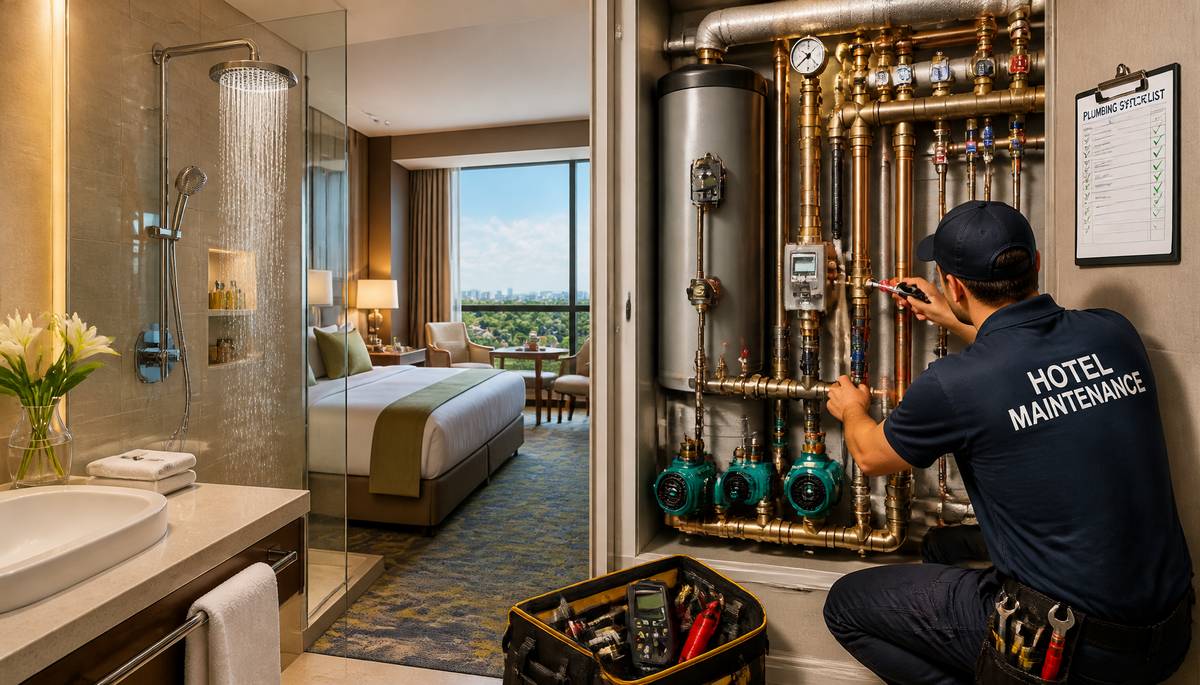 A hotel can survive a disappointing breakfast, an uncomfortable mattress or a receptionist who appears to have misplaced their enthusiasm for humanity. What it cannot easily survive is two hundred guests discovering simultaneously that their showers have stopped working. Plumbing may be largely invisible to visitors, but its reliability underpins almost every aspect of a hotel's daily operation. Unlike ordinary residential or commercial buildings, hotels experience unusually concentrated periods of water consumption, creating maintenance challenges that demand a considerably more sophisticated approach.
A typical household might have two or three people using the bathroom during the morning. A busy hotel could have hundreds, many following remarkably similar routines. Guests wake, shower, flush toilets and prepare for breakfast within a relatively narrow window. Meanwhile, kitchens are preparing meals, housekeeping staff are cleaning rooms and laundry facilities may already be operating at full capacity. The plumbing system must accommodate all these activities without allowing one department's water consumption to undermine another's.
When Everyone Wants a Shower at Once
Peak demand represents one of the greatest differences between hotel plumbing and ordinary building services. Water distribution systems must deliver sufficient flow and pressure even when numerous outlets are operating simultaneously.
Without appropriate design and maintenance, guests on upper floors may experience weak showers while those downstairs enjoy perfectly satisfactory water pressure. Sudden fluctuations can also affect temperature stability, particularly where older mixing valves or poorly balanced distribution systems are involved. Nobody appreciates discovering that their morning shower has unexpectedly developed the characteristics of a Scottish mountain stream.
Hotel maintenance teams should monitor water pressure at representative locations throughout the building, including upper floors and rooms situated furthest from the main supply. Measurements taken during quiet periods provide useful baseline information, but readings during peak morning demand are considerably more revealing.
Pressure sensors, flow meters and building management systems can help identify unusual fluctuations before they become widespread complaints. Where necessary, properly designed booster pumps, pressure regulation equipment and distribution improvements can provide more consistent performance.
Hot Water Is a Commercial Responsibility
Domestic hot water systems are rarely designed to supply dozens of consecutive showers. Hotels commonly rely on commercial water heaters, calorifiers, storage vessels and circulation networks capable of delivering substantial quantities of heated water throughout the day.
These installations require careful management. Insufficient heating capacity can leave guests waiting for hot water, while poorly maintained circulation systems may produce inconsistent temperatures between rooms. Oversized or inefficient equipment can also increase energy consumption unnecessarily.
Water hygiene is particularly important. Hotels must manage the risk of Legionella bacteria through appropriate temperature control, monitoring, cleaning and risk assessments. Storage and distribution arrangements should follow applicable water safety regulations and recognised professional guidance.
Regular inspections should examine heating performance, circulation pumps, thermostatic mixing valves, insulation and evidence of sediment accumulation. Maintenance records should document findings and corrective work, rather than existing solely as a collection of increasingly optimistic ticked boxes.
Ageing Pipework and the Problems Nobody Can See
Hotels occupying older buildings face additional complications. Pipework may have been installed decades earlier, extended during refurbishments and modified repeatedly as rooms were rearranged or additional bathrooms introduced. The resulting distribution network can resemble an archaeological excavation conducted by several generations of plumbers who never met one another.
Corrosion, mineral deposits, deteriorating joints and partially obstructed pipes can gradually reduce performance. Small leaks concealed behind walls or beneath floors may remain unnoticed until damp patches appear in guest rooms. By that stage, repairs can involve considerably more than replacing a defective fitting.
Preventative maintenance should include periodic pipework inspections, leak detection, water quality assessments and examination of accessible joints and valves. Hotels can also benefit from maintaining accurate plumbing diagrams, particularly when planning renovations or investigating recurring problems.
Maintenance Without Evicting the Guests
One particularly awkward aspect of hotel plumbing maintenance is that the building rarely stops operating. Closing an entire floor to replace a valve might be convenient for engineers, but considerably less appealing to guests who have already unpacked their suitcases.
Successful maintenance therefore requires coordination between engineering teams, housekeeping, reception and hotel management. Planned interruptions should take place during periods of lower occupancy wherever possible, with affected rooms identified well in advance.
Isolation valves are especially valuable because they allow individual sections of a plumbing network to be shut down without interrupting water supplies throughout the property. Hotels should regularly test these valves rather than discovering during an emergency that a supposedly functional component has not moved since 1987.
Larger improvements can be divided into phases, allowing sections of pipework, pumps or heating equipment to be upgraded while other facilities remain operational. Temporary water arrangements and contingency plans may be necessary for particularly extensive projects.
Preventative Maintenance Beats Emergency Repairs
Reactive plumbing maintenance can become extraordinarily expensive in hotels. A burst pipe may damage several rooms, interrupt bookings, affect electrical installations and require extensive drying and restoration work. The resulting disruption can easily exceed the original repair cost.
A structured preventative maintenance programme should establish inspection intervals based on equipment condition, manufacturer recommendations, water quality and operational demands. Particular attention should be given to pumps, expansion vessels, pressure reducing valves, storage tanks, circulation systems and high-use bathroom fittings.
Maintenance teams should also analyse recurring guest complaints. Several reports of poor shower pressure on the same floor may indicate a developing distribution problem rather than an unfortunate coincidence involving particularly demanding visitors.
Keeping Everything Flowing Smoothly
Effective hotel plumbing management ultimately depends on understanding how the building is actually used. Occupancy patterns, seasonal demand, laundry schedules and kitchen operations all influence water consumption. Monitoring these factors allows managers to identify weaknesses, schedule improvements and invest in equipment that matches genuine operational requirements.
Water-efficient fixtures, intelligent leak detection and modern pump controls can reduce unnecessary consumption without compromising guest comfort. However, upgrades should be assessed as part of the wider plumbing network rather than introduced independently.
A reliable hotel plumbing system rarely attracts attention, which is precisely the point. Guests remember comfortable rooms, efficient service and enjoyable stays. They should not remember standing beneath a showerhead at seven in the morning, wondering whether the hotel has introduced water rationing as an unexpected wellness initiative.
|
|
